You drop a marble in the kitchen and it rolls straight to the corner. The dining chair rocks no matter how you set it. Walking down the hallway feels like a gentle hill.
Uneven floors in house rooms are easy to ignore at first. Then one day you realize you’ve been subconsciously adjusting to them for years.
Sometimes the cause is minor. Sometimes it’s the foundation telling you something. Here’s how to tell the difference, what usually causes the problem and how it gets fixed.
Is a Little Unevenness Normal?
A bit, yes. No house is perfectly flat. Concrete slabs are poured by hand, framing settles and older homes have decades of history in their floors.
Small differences you can only find with a level usually aren’t a concern. What matters is when you can feel it, see it or watch it get worse.
Common Causes of Uneven Floors in House Rooms
The cause depends a lot on what kind of foundation you have.
A Settling Slab
On slab homes, a settling slab is the most common reason. Part of the soil under the house loses support, and that part of the slab drops.
In Houston, that usually comes back to clay soil drying out and shrinking, often near big trees, poor drainage or the sunniest side of the house. You’ll notice the floor sloping toward one corner or one wall.
Sagging Floor Joists
On pier and beam homes, sagging floor joists are a big culprit. Joists can sag from age, rot, termite damage or being spaced too far apart for the load.
You’ll often feel this as a dip in the middle of a room, or a bouncy spot near a bathroom or kitchen where moisture has gotten into the wood.
Sunken Piers or Blocks
Pier and beam homes rest on piers or block stacks. If one sinks or tilts, the beam above it drops, and so does the floor. This tends to cause a noticeable low spot in one area.
Our post on block and base foundation repair covers this in detail.
Slab Heave
Not every uneven floor is a drop. Sometimes the middle of the slab rises. Heave happens when clay soaks up water and swells, often from a plumbing leak or poor drainage under the house.
Sloping Floors and What They Point To
Sloping floors can tell you a lot if you pay attention to the pattern.
- A slope toward one outside corner usually means that corner of the foundation dropped
- A dip in the middle of a room on pier and beam often points to joists or a sunken pier
- A hump in the middle of a slab home can mean heave from moisture underneath
- Slopes that change with the seasons usually tie back to soil moisture
Write down where the slope goes and how it feels. Note the room, the direction and whether it seems worse in summer. That simple note helps an inspector a lot, and it saves time on inspection day.
Other Signs That Usually Come Along
Uneven floors in house rooms rarely show up alone. Look for these too.
- Doors that stick, drag or swing open on their own
- Cracks in drywall, especially near door corners
- Gaps between baseboards and the floor
- Cracked tile or grout lines
- Stair-step cracks in exterior brick
If you’re seeing several of these on the same side of the house, the foundation is the likely source. Our page on signs of foundation issues lists more.
Simple Ways to Check Your Floors
You can do a quick test yourself before calling anyone.
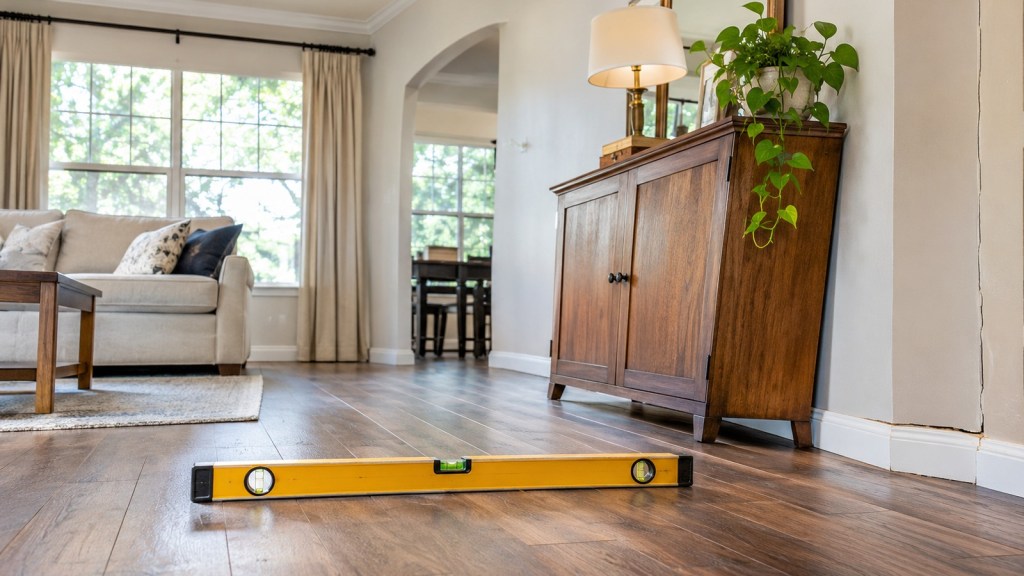
Roll a marble or golf ball in a few spots and see which way it goes. Set a long level on the floor in different rooms. Use a phone level app on a straight board for a rough reading.
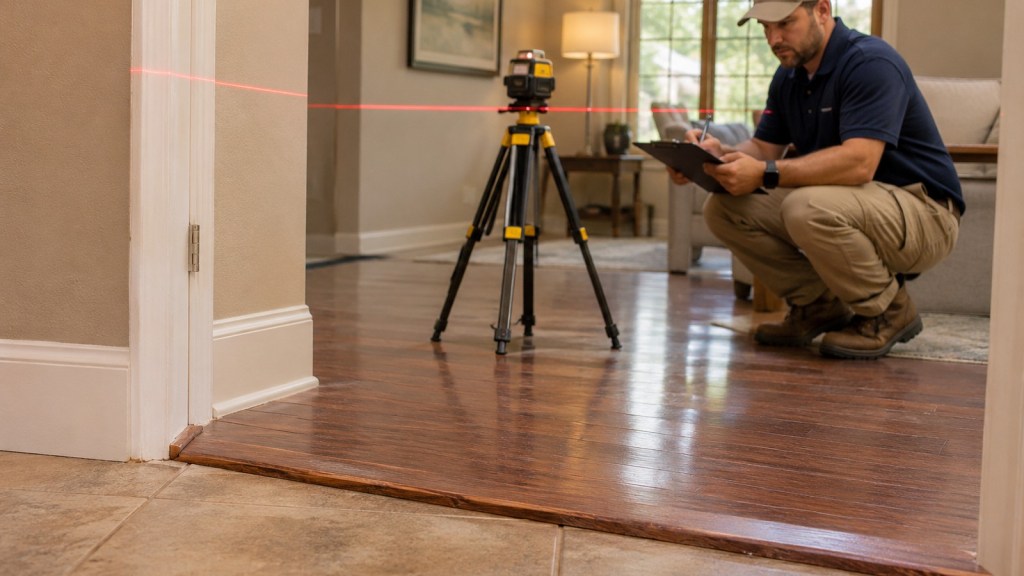
None of these replace a professional elevation survey. But they’ll tell you whether it’s worth booking one, and they take about five minutes on a Saturday morning.
How Uneven Floors Get Fixed
The fix depends on the cause, which is why an inspection comes first.
For Slab Homes
If the slab has settled, piers are installed under the low areas. They reach firmer soil, and the house is lifted back toward level. Our post on foundation underpinning walks through how that works.
If heave is the problem, the cause is usually water. Finding and fixing a plumbing leak or drainage issue comes first.
For Pier and Beam Homes
Many pier and beam floors can be leveled from the crawl space. Crews adjust shims, replace sunken piers, add support points and sister or replace damaged joists. Our crawl space foundation team handles this kind of work every week.
What About House Leveling Cost?
House leveling cost varies a lot. Simple reshimming on a pier and beam home is often one of the least expensive foundation repairs out there. Slab repairs with many piers cost more.
Size, access, the number of piers needed and any wood repairs all affect the price. You can see typical ranges in our guide to foundation repair cost in Houston.
Can You Just Use Self-Leveling Compound?
Some people try to fix uneven floors with leveling compound or new subfloor shims before installing flooring. That can make a floor feel flatter.
But if the foundation is still moving, the problem will come back. And now it’s hiding under brand new flooring. Fix the cause first, then fix the surface.
For more on why quick fixes often backfire, see this advice from InterNACHI on what home inspectors look for in floors and foundations.
Don’t Ignore Bathrooms and Kitchens
Pay extra attention to wet rooms. On pier and beam homes, a slow leak under a tub or sink can rot the subfloor and joists without anyone noticing.
The floor may feel soft or spongy before it ever looks uneven. Tile may crack in a line. If you notice either, check under the house or call someone who can.
On slab homes, a leak under a kitchen or bathroom can soften the soil and cause that area to sink, or swell the clay and push the floor up. Either way, finding the water is step one.
When to Call a Pro
If you can feel the slope when you walk, see gaps under baseboards or watch cracks grow, it’s time. Waiting usually makes the repair bigger and more expensive.
Questions Homeowners Ask
Are uneven floors in house rooms dangerous?
Usually not right away. But they can be a trip hazard, and they often signal movement that will get worse if ignored.
Do uneven floors hurt resale value?
They can. Buyers and inspectors notice. A documented repair with a warranty usually helps the sale.
Can new homes have uneven floors?
Yes. Slabs can settle in the first few years, especially on graded or filled lots.
Get Your Floors Checked
If you’ve been living with uneven floors in house rooms and wondering whether it’s a big deal, a quick inspection can settle it.
We’ll measure, explain what’s going on and give you an honest plan. Call (866) 617-0406 or book your free estimate today.