The water’s gone. The fans are running, the carpet’s on the curb and the drywall has been cut out up to four feet.
You’re exhausted. And the last thing on your mind is the foundation.
That’s understandable. But floods don’t just soak walls and floors. They soak the ground your house sits on, and that can cause trouble weeks or months later. Here’s how foundation damage after a flood happens, what to look for and what to do about it.
How Floodwater Affects Your Foundation
Most people picture flood damage as wet drywall and ruined furniture. Under the house, something else is going on.
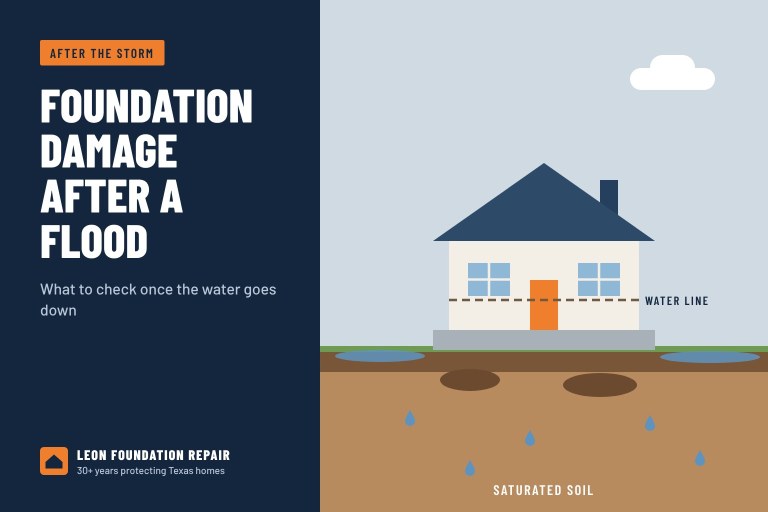
Saturated Soil
When the ground floods, the clay under your slab soaks up water and swells. Saturated soil also loses strength. It can’t carry weight the way it normally does.
As the water drains and the soil dries over the following weeks, it shrinks. If it dries unevenly, part of the slab can drop while another part stays put.
Soil Erosion Under Slab
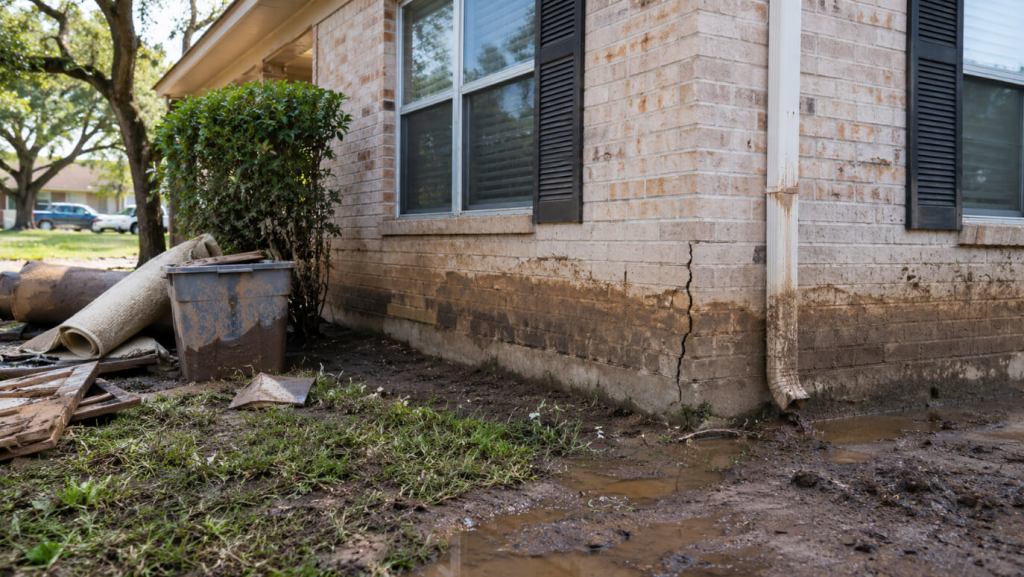
Moving water carries soil with it. Around the edges of the house, and under the slab near low spots, floodwater can wash away dirt and leave voids.
Soil erosion under slab edges is especially common where water rushed past the home, near downspouts or where the yard slopes toward the foundation. Without that soil, the slab has nothing to rest on in those areas.
Pressure on Walls and Slabs
Fast-rising water can push sideways on the house. Standing water can also lift lighter structures slightly. Most Houston slab homes handle this, but it can stress older or lighter homes, sheds and additions.
Signs of Foundation Damage After a Flood
Some signs show up right away. Others take a while, as the soil dries and settles. Keep an eye out for these over the next few months.
- New cracks in drywall, especially diagonal ones from door and window corners
- Doors that suddenly stick or won’t latch
- Cracks in exterior brick, often in a stair-step pattern
- Gaps between the slab and the soil around the house
- Cracks in the slab or garage floor that weren’t there before
- Floors that feel sloped or uneven
It helps to take photos of your walls and slab right after cleanup, even if everything looks fine. Then you’ll have something to compare to later.
Why It Can Show Up Months Later
This catches a lot of people off guard. Everything looks fine in September after a storm. Then by spring, cracks start appearing.
That’s the soil drying, shrinking and settling unevenly. Clay can take a long time to fully dry out after deep soaking. The movement doesn’t happen all at once.
So foundation damage after a flood isn’t always obvious during cleanup. It often reveals itself slowly, which is why a follow-up look matters.
When to Get a Post Flood Inspection
A post flood inspection makes sense if any of these apply to you.
- Water stood around or inside the house for more than a day or two
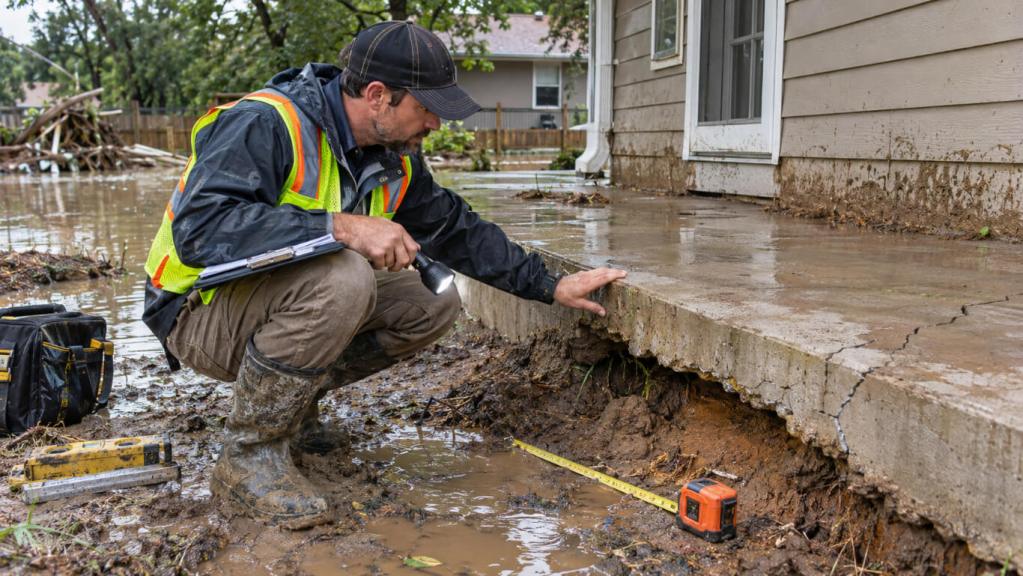
- You can see erosion or washouts near the slab
- New cracks or sticking doors showed up after the flood
- Your home already had foundation issues before the storm
- You’re planning to repair and stay, or to sell
During the inspection, a pro takes elevation readings across the slab and checks for voids, erosion and new movement. If you plan to rebuild, it’s smart to know the foundation is sound before you hang new drywall.
Flood Damaged Foundation Repair
Most flood damaged foundation repair looks a lot like other slab repair. If parts of the house dropped, piers are installed to reach firmer soil, and the home is lifted back toward level.
If soil washed out from under the slab, voids may be filled. Drainage is often a big part of the fix too, since water that pooled once will pool again. Our post on Houston foundation drainage explains why it matters so much.
For details on how piers work, see our post on foundation underpinning.
Don’t Forget the Crawl Space
Pier and beam homes face their own flood problems. Water in the crawl space soaks wood beams, sill plates and floor joists. If it lingers, rot and mold can follow.
Piers sitting on shallow pads can also shift as the soaked soil settles. Once things dry, check under the house for sagging beams, leaning piers or soft wood. Our crawl space foundation team handles exactly this kind of cleanup and repair.
It’s easy to focus on what you can see inside the house. But a few minutes with a flashlight under the floor can catch damage before it spreads.
What About Insurance?
This is tricky. Standard homeowners policies usually don’t cover flood damage at all. Flood insurance covers some foundation damage directly caused by flooding, but the details vary.
Movement that shows up months later can be harder to tie to the flood. That’s one more reason to document everything early and get an inspection on record. We explained more in our post on whether homeowners insurance covers foundation repair.
Should You Raise the House Instead?
If your home has flooded more than once, repairing the foundation and putting everything back may just set you up for the next flood.
For a lot of Houston families, raising the house is the bigger, smarter fix. It protects against future flooding and can lower flood insurance costs. Our house raising page covers how it works, and a substantial damage ruling after a flood may even open the door to grant money.
Rebuild in the Right Order
After a flood, contractors get booked fast and everyone wants their house back. It’s tempting to rush drywall and paint.
Try to get the foundation checked before the finish work goes in. If the slab needs leveling, new drywall can crack all over again once the house is lifted. Fix what’s underneath first, then make it pretty.
Steps to Take Right After a Flood
Before anyone can fix the foundation, a few things help limit damage.
- Pump standing water away from the house as soon as it’s safe
- Clear gutters and downspouts so new rain drains away
- Fill obvious washouts near the slab with soil and grade it away
- Photograph cracks, doors and the slab edge with dates
- Avoid heavy equipment or vehicles near weakened soil
For safety tips during and after a flood, Ready.gov has a helpful checklist for homeowners.
Questions Homeowners Ask After a Flood
How long should I wait before getting the foundation checked?
A first look soon after cleanup is useful. A second check a few months later catches movement as the soil dries.
Will my foundation go back to normal once things dry?
Sometimes, partly. But uneven drying often leaves the slab out of level, and that usually needs repair.
Is foundation damage after a flood always serious?
No. Many homes come through fine. The point of an inspection is to know for sure.
Get Peace of Mind After the Storm
You’ve already been through enough. Let us take one worry off the list.
We’ve helped Houston families after Harvey, Imelda, Beryl and plenty of storms in between. If you’re worried about foundation damage after a flood, call (866) 617-0406 or book a free inspection. We’ll check the slab, explain what we find and help you plan the next step.