Houston loves its trees. Big live oaks shading the street, pines in the backyard, a crape myrtle by the front walk.
They make a neighborhood feel like home. They also drink a lot of water.
When that water comes from the soil under your slab, trouble can follow. Tree roots foundation damage is one of the most common causes of uneven settlement we see around Houston. Here’s how it happens, which trees cause the most problems and what you can do without cutting down every tree on the lot.
How Tree Roots Foundation Damage Happens
Most people imagine roots growing straight into the concrete and cracking it like a sidewalk. That can happen with very shallow slabs or old pier pads, but it’s not the main problem.
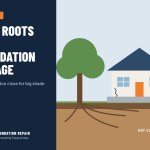
The real issue is water. A large tree can pull a huge amount of moisture out of the ground every day in summer. When its roots spread under or near the house, they dry out the clay beneath part of the slab.
Houston clay shrinks as it dries. So the side of the house near the tree drops, while the rest stays put. That’s how tree roots foundation damage usually starts.
Soil Moisture Loss Is the Real Culprit
Soil moisture loss under one part of the slab creates uneven support. The foundation bends to follow it, and that bending shows up as cracks, sticking doors and sloped floors.
It gets worse during droughts. Trees work harder to find water, roots spread further and the clay dries deeper. Many homes that held steady for years suddenly start moving after a long, hot summer.
Our post on what Texas heat does to the soil beneath your home explains more about how summer pulls moisture from the ground.
Which Trees Cause the Most Problems?
Some trees are much thirstier than others, and some spread their roots wider.
Live Oaks
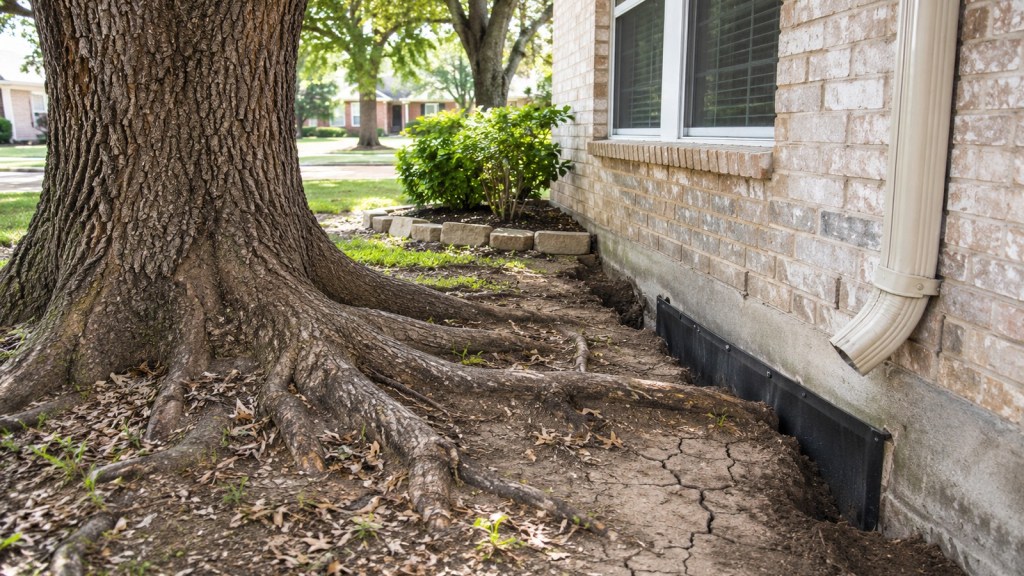
Live oak roots can spread far beyond the canopy. These trees are huge water users, and they’re everywhere in Houston. A mature live oak close to a slab is one of the most common sources of trouble we see.
Water Oaks and Willows
Water oaks and willows grow fast and love moisture. Willows especially will chase water toward plumbing lines and damp soil near the house.
Pines
Pines are common north of Houston. Their roots are a bit less aggressive near slabs than oaks, but large ones still pull plenty of moisture.
Smaller Trees and Shrubs
Crape myrtles, small ornamentals and most shrubs are much less of a concern. Their root systems are smaller, and they use less water.
How Close Is Too Close?
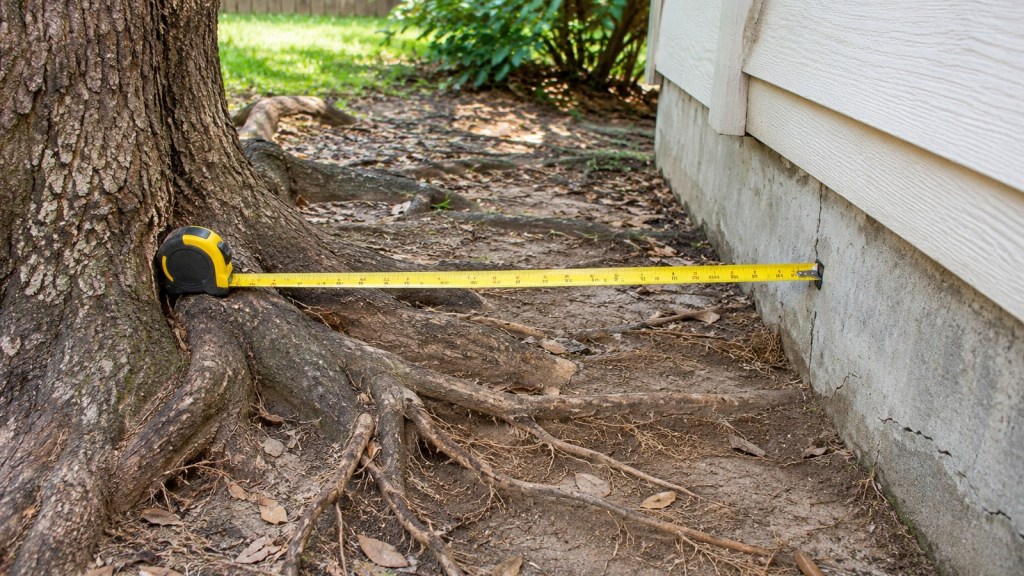
A common rule of thumb is to keep a tree at least as far from the house as its mature height will be. A tree that grows to 40 feet tall should ideally sit about 40 feet away.
That’s not always realistic on a city lot. In practice, the risk rises sharply when large trees near foundation walls sit within about 20 feet. Within 10 feet, they’re very likely to affect the slab during dry years.
Roots can spread two to three times wider than the canopy. So even a tree that looks far enough away can still reach under the house.
Signs Tree Roots Are Affecting Your Foundation
Look for a pattern. Tree roots foundation damage usually shows up on the side of the house closest to the tree.
- Cracks in brick or drywall on the tree side of the home
- Doors on that side sticking more in summer
- Gaps between the soil and the slab near the tree
- Floors that slope toward the tree
- Problems that get worse in dry months and ease after rain
If all of this lines up with where your big oak stands, that’s a strong clue.
Do You Have to Cut the Tree Down?
Not always. In fact, removing a large tree suddenly can cause its own problems. The soil that was kept dry by the tree can soak up water and swell, pushing that part of the slab up instead.
That’s called heave, and it can be just as damaging as settlement. Removing a big tree is a decision to make with care, ideally after talking with both an arborist and a foundation pro.
Using a Root Barrier
A root barrier is a sheet of tough material buried vertically in the ground between the tree and the house. It blocks roots from growing toward the slab.
Barriers usually go down several feet, deep enough to stop most roots in the active clay layer. They’re a good option when you want to keep a tree but protect the foundation.
They work best when installed before major damage happens. If the house has already dropped, you’ll likely need a repair plus the barrier, so it doesn’t happen again.
Other Ways to Protect Your Foundation
You can also reduce the impact of trees with a few simple habits.
- Water the soil around the foundation evenly during long dry spells
- Water trees deeply near their drip line, so roots don’t hunt toward the house
- Plant new trees well away from the slab
- Keep gutters draining away from the house, not toward tree beds
Steady soil moisture is your best defense. Our post on how watering your lawn can help your foundation has more practical tips.
For advice on picking the right tree for the right spot, Texas A&M Forest Service has helpful guides for Texas homeowners.
Planting New Trees the Smart Way
Moving into a new build with a bare yard? You’ve got a chance to get it right from day one.
Plant big shade trees well away from the house, toward the back of the lot or near the street. Keep smaller ornamentals and shrubs closer in. Pick species that don’t need huge amounts of water once they’re established.
Think about where the tree will be in 20 years, not where it is today. That cute little oak sapling by the patio won’t stay little.
When Repair Is Needed
If a tree has already pulled one side of the house down, piers are usually the fix. They reach below the dry, shrinking clay to firmer soil, so the house no longer depends on moisture levels near the surface.
Our post on foundation underpinning explains how that works. Pairing the repair with a root barrier or better watering keeps the rest of the house stable too.
Questions We Hear About Trees
Can roots break through a slab?
It’s rare with modern slabs. Roots usually cause damage by drying the soil, not by cracking concrete directly.
Will my neighbor’s tree affect my foundation?
It can. Roots don’t respect property lines. Talk to your neighbor, and consider a root barrier on your side.
Will insurance pay for root damage?
Usually not. Most policies treat it as soil movement or maintenance, not sudden damage.
Protect Your Home and Keep Your Trees
You don’t have to choose between shade and a solid foundation. With the right plan, most homes can keep both.
If you suspect tree roots foundation damage, call (866) 617-0406 or book a free inspection. We’ll measure the slab, look at your trees and give you an honest plan.