Almost every foundation company in Houston advertises some kind of warranty. “Lifetime.” “Transferable.” “Guaranteed.” The words start to blur together after a while.
But two warranties with the same name can be very different once you read them. And the warranty is one of the most important parts of your repair, especially if you ever plan to sell.
Here’s what a lifetime transferable foundation warranty usually covers, what it doesn’t and the questions to ask before you sign.
What “Lifetime” Really Means
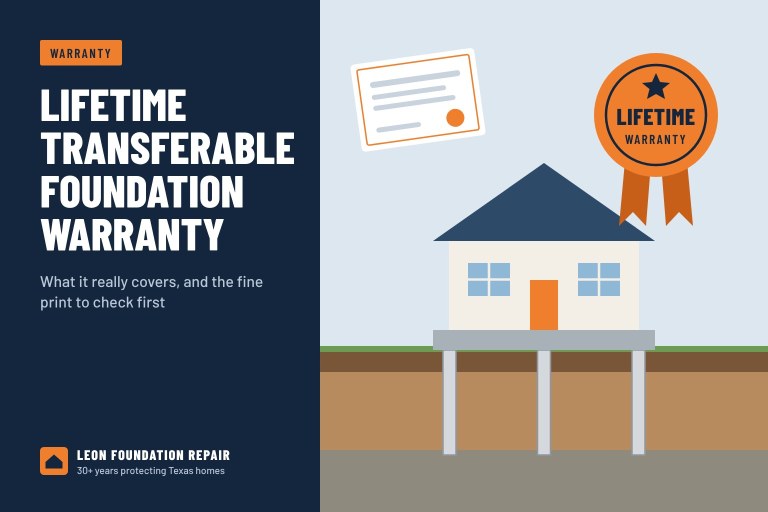
This is the first thing to clear up. In foundation repair, “lifetime” almost never means your lifetime. It usually means the life of the structure, or as long as the home stands.
Some companies define it differently, though. A few limit it to the original owner. Others tie it to certain conditions, like keeping up with drainage or soil moisture.
So the word alone doesn’t tell you much. The written terms do.
What a Lifetime Transferable Foundation Warranty Usually Covers
Most warranties focus on the piers that were installed and the area they support. Coverage often includes:
- The piers themselves, if they fail or sink
- Re-leveling the repaired area if it settles again
- Labor to make those adjustments
- Shims and other materials used in the adjustment
What gets covered, and how, varies by company. That’s why reading the actual warranty matters more than reading the ad.
Adjustment Coverage Explained
This is the part that matters most day to day. Adjustment coverage means if the repaired area of your home moves again, the company comes back and re-levels it.
Houston clay never stops moving completely. Even after a solid repair, a home can shift a little over the years as the seasons swing between wet and dry. A good warranty plans for that.
Ask how adjustments work. Is there a fee for the visit? How quickly will they come out? How much movement triggers an adjustment? Clear answers here are a good sign.
How a Foundation Warranty Transfer Works
A transferable warranty can pass from you to the next owner when you sell. That’s a big deal for buyers, since it means the repair stays protected after closing.
Most foundation warranty transfer processes involve a few simple steps. You notify the company, fill out a form and sometimes pay a small transfer fee. There may be a deadline, often within a certain number of days after the sale.
Miss that window and the warranty might not carry over. So put it on your selling checklist right next to the utilities.
Why Transferability Boosts Resale Value After Foundation Repair
Foundation repair makes some buyers nervous. A transferable warranty turns that worry into reassurance.
When buyers see the problem was fixed, documented and is still under warranty, it often eases concerns and smooths negotiations. It can protect your resale value after foundation repair and help the house sell faster.
Texas sellers are generally required to disclose known foundation issues and repairs. You can find the standard seller’s disclosure form on the Texas Real Estate Commission website. Handing over repair records and a warranty alongside that disclosure makes for a much stronger story.
If you’re weighing whether to repair before selling, our post on fixing your foundation vs selling the house breaks down both options.
Reading the Warranty Fine Print
Here’s where most surprises hide. Before you sign, read the warranty fine print and look for answers to these questions.
What Part of the House Is Covered?
Many warranties only cover the area where piers were installed. If another side of the house settles later, it may not be included. Ask whether partial repairs leave other areas exposed.
What Are the Homeowner’s Responsibilities?
Some warranties require you to keep gutters working, water the foundation in dry weather or fix plumbing leaks promptly. Failing to do that can void coverage.
Is Cosmetic Damage Included?
Most foundation warranties don’t cover drywall cracks, brick repair, paint or plumbing damage caused by movement. That’s normal, but it’s good to know up front.
Who Backs the Warranty?
A lifetime warranty is only as good as the company behind it. Ask how long the company has been in business and whether the warranty is backed by any third party.
Red Flags to Watch For
A few things should make you pause:
- A warranty that’s only verbal, with nothing in writing
- Terms that are vague about what “lifetime” means
- Big fees for every adjustment visit
- A company that’s only been around a year or two
- Pressure to sign before you’ve read the warranty
A solid company will happily walk you through its warranty line by line. If they get defensive, that tells you something.
Warranty vs Doing the Job Right
Here’s the truth. The best warranty in the world doesn’t replace a good repair. You want piers placed in the right spots, driven to firm soil and installed by an experienced crew.
A strong warranty is a backup plan. A strong repair means you hopefully never need it. Our post on choosing the right foundation repair contractor covers how to judge both.
Keep Your Paperwork Safe
Once the job is done, file everything in one place. Your warranty, the repair plan, before and after elevation readings and any engineer letters.
You’ll want all of it when you sell, and you’ll want it if you ever need an adjustment. A simple folder, or a scanned copy in the cloud, saves a lot of headaches later. Our post on what to expect after foundation repair has more tips for those first months.
Questions Homeowners Ask About Warranties
Does the warranty cover my whole house?
Usually not. Most cover the repaired area and the piers installed. If you want broader protection, ask whether a full perimeter repair makes sense for your home.
What if the company goes out of business?
That’s the risk with any warranty. It’s one reason to choose a company with a long track record and steady local presence.
Do I need to register the warranty?
Some companies register it automatically. Others ask you to sign and return paperwork. Either way, keep a copy.
Is a lifetime transferable foundation warranty worth paying more for?
In most cases, yes. If you plan to sell within the next decade, transferability alone can save you headaches and help buyers feel confident about the home.
How Long Do Repairs Typically Hold?
A solid repair with piers driven to firm soil can last for decades. Most adjustment requests we see come from areas that weren’t part of the original repair, or from big drainage changes around the house.
That’s another reason to read your coverage closely and keep up with simple maintenance like gutters and soil moisture.
Get the Facts About Your Warranty
At Leon Foundation Repair, we offer lifetime, transferable warranty options on our foundation work, and we’re happy to explain exactly what’s covered for your specific repair before you commit.
A lifetime transferable foundation warranty should give you real peace of mind, not just a nice line on a brochure. Learn more about our foundation repair services, or call (866) 617-0406 for a free inspection.