Katy, Cypress and Spring have grown like crazy over the last couple of decades. Farmland and open prairie turned into master-planned communities almost overnight.
That growth brought great schools, new shopping and a lot of happy homeowners. It also brought a lot of slabs poured on some of the most movement-prone soil in Texas.
If you live out here and you’re seeing cracks, sticking doors or sloping floors, you’re not alone. Here’s why foundation repair in Katy TX is such a common need, what’s happening in Cypress and Spring, and what you can do about it.
The Soil Story: Gumbo Clay
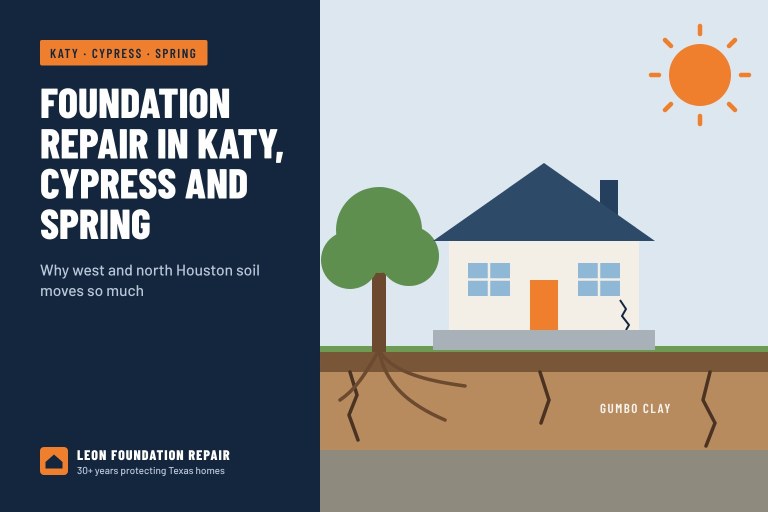
Long-time Texans call it gumbo soil. It’s thick, sticky clay that turns to glue when it’s wet and cracks wide open when it dries.
That clay is expansive, which means it swells when it soaks up water and shrinks when it loses it. A lot of the land west and northwest of Houston sits on clay like this, and the active layer can run several feet deep.
Your slab rests right on top of it. Every time the soil swells or shrinks, the foundation feels it. Our post on expansive clay soil in Texas explains the science in more detail.
Why Katy Homes Move So Much
Katy sits on wide, flat former prairie and rice farmland. That flat ground drains slowly, so water tends to sit in the soil after heavy rain.
Then summer hits. Weeks of heat and little rain dry out the top layers of clay, and the ground shrinks back hard. That wet-dry swing is tough on slabs.
Add newer homes with young landscaping, big lots with sprinklers on some sides but not others, and you get uneven moisture. That’s when one part of the slab moves more than another, and cracks show up.
What Foundation Repair in Katy TX Usually Looks Like
Most Katy homes are slab on grade. When they settle, the go-to fix is usually pressed concrete pilings around the perimeter, with interior piers when needed.
Many Katy jobs also include a drainage review. Fixing how water moves around the house is just as important as lifting it back to level.
Cypress Foundation Problems
Cypress foundation problems look a lot like Katy’s, with a few twists.
Cypress has a mix of older neighborhoods and newer communities. Older homes may already have years of seasonal movement built up. Newer ones are still finding their footing.
Cypress also has more mature trees in some areas. Big oaks and pines planted too close to the house can pull serious moisture from the soil under the slab, especially in drought years. That often shows up as cracks on the side of the house nearest the tree.
Spring TX House Leveling
Spring has its own personality. More trees, more creeks and a mix of slab homes and some older pier and beam houses.
Spring TX house leveling jobs often involve tree root issues and drainage near low spots or creek areas. Pier and beam homes here may need reshimming or new supports when the crawl space gets too wet or the soil underneath shifts.
Slab homes in Spring follow the same pattern as the rest of the area. Clay moves, slabs crack, and underpinning brings them back to stable support.
New Construction Foundation Settling
A lot of people are surprised when a fairly new house starts showing cracks. “It’s only five years old. How can the foundation already be moving?”
It happens more than you’d think. New construction foundation settling is common across fast-growing suburbs. Soil may have been graded or filled before building, and it can take years to fully settle. Builders also move fast, and site prep isn’t always perfect.
Some movement in the first few years is normal. Cracks that keep growing, doors that start sticking or floors that tilt are worth a professional look, especially while any builder warranty may still be active.
Warning Signs to Watch For
Katy, Cypress or Spring, the signs tend to look the same. These are the ones we see most often:
- Stair-step cracks in exterior brick
- Diagonal cracks in drywall near doors and windows
- Doors that stick or won’t latch
- Gaps between baseboards and the floor
- Cracks in the garage slab or driveway that keep spreading
- Windows that suddenly get hard to open
One small crack isn’t a reason to panic. A handful of these together is a good reason to call for an inspection.
Simple Ways to Protect Your Foundation
You can’t change the soil, but you can manage how much it moves.
Keep moisture steady around the slab, especially in long dry spells. A soaker hose a foot or two from the foundation can help. Our post on how watering your lawn can help your foundation shares more tips.
Make sure gutters drain water away from the house. Keep large trees a good distance from the slab, or talk to an arborist about root barriers. Fix plumbing leaks quickly, since a leak can soften soil on one side.
Want to see what kind of soil sits under your neighborhood? The USDA’s Web Soil Survey lets you look up soil types by address. It’s a little technical, but interesting.
What Foundation Repair in Katy TX Costs
Costs out here follow the same basic math as the rest of Houston. Pier count, pier type, how far the house has moved and whether interior piers are needed all shape the price.
Bigger suburban homes often have longer perimeters, which can mean more piers. Two-story homes are heavier and may need deeper support. On the flip side, newer homes often have less wood rot or plumbing trouble to deal with than older houses in town.
We offer financing through Synchrony for approved buyers, so a repair doesn’t have to wait for the perfect moment.
Don’t Wait Out a Dry Summer
A lot of homeowners notice cracks in August and decide to “see what happens” once the rain comes back. Sometimes the cracks close a bit in fall. Then they open again the next summer, a little wider.
That cycle is how small problems become big ones. If your home has moved enough to notice, it’s worth getting measured now, while the fix is still simple.
Why a Local Crew Matters
Soil in Katy behaves a little differently than soil in Spring, and good foundation repair in Katy TX starts with knowing that. Drainage in an older Cypress neighborhood isn’t the same as in a brand new subdivision.
We’ve worked across the greater Houston area for over 30 years, so we know how these areas move and what tends to work. That local experience helps us plan the right number of piers in the right places, the first time.
You can see all the areas we serve on our locations page.
Questions From Katy, Cypress and Spring Homeowners
Is foundation repair in Katy TX different from Houston proper?
The methods are the same. What changes is soil depth, drainage and the age of the homes, which can shift how many piers are needed and where.
Can a newer home really need repairs?
Yes. New homes can settle unevenly, especially on filled or graded lots. Catching it early keeps the fix smaller.
Do you charge to come out to the suburbs?
No. Our inspections are free across our service area.
Book a Free Inspection
If your Katy, Cypress or Spring home is showing signs of movement, don’t wait for the cracks to grow. A quick inspection can tell you exactly what’s going on.
Call (866) 617-0406 or request your free estimate. We’ll measure, explain what we find and give you a clear plan, with no pressure.