North of Houston, the landscape changes. The flat prairie gives way to tall pines, rolling ground and neighborhoods tucked into the trees.
It’s one of the prettiest parts of the region to live in. It also comes with its own set of foundation challenges.
If you live in The Woodlands, Conroe or Kingwood and you’re seeing cracks or sticking doors, you’re not alone. Here’s what makes foundations move in North Houston, what foundation repair in The Woodlands and nearby towns usually involves, and how to protect your home.
Why North Houston Soil Is Different
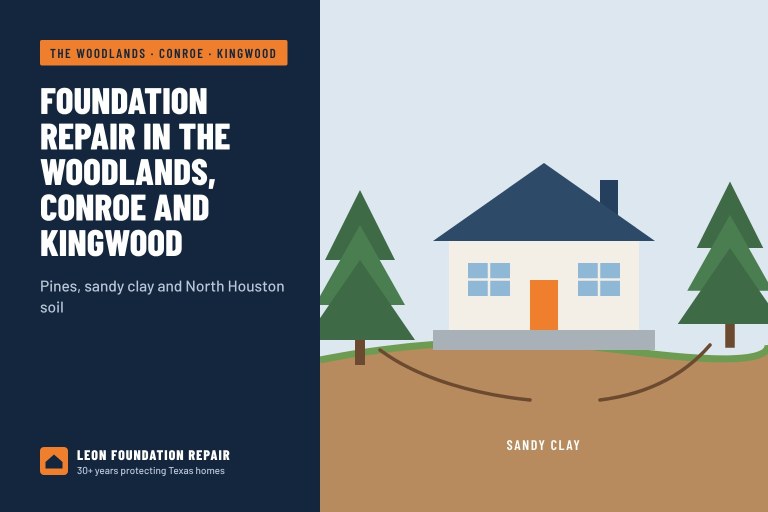
The soil up here isn’t the same thick gumbo clay you find around Katy or Pasadena. Much of the area sits on a mix often described as sandy clay soil, layers of sand, silt and clay that vary from one street to the next.
Sandy layers drain faster. Clay layers still swell and shrink. When the two sit side by side under a slab, the foundation can move unevenly, with one part staying put while another drops.
Rolling ground adds another twist. Water runs downhill toward some homes and away from others, so drainage matters a lot.
The Pine Tree Factor
The Woodlands is famous for its trees. Kingwood calls itself the Livable Forest. That’s a big part of the appeal.
Pine tree roots and the roots of big oaks pull a lot of water from the ground. When they spread under or near a slab, they dry out the soil on that side of the house. The clay shrinks, and that part of the foundation drops.
Removing trees isn’t always the answer, either. Taking out a big tree can let the soil swell back up, which causes its own problems. Our post on tree roots and foundation damage explains the balance.
Foundation Repair in The Woodlands
Most homes in The Woodlands are slab on grade, many built from the 1970s onward. Over decades, tree roots, drainage and seasonal swings add up.
Foundation repair in The Woodlands usually means pressed concrete pilings or steel piers around the affected area, plus interior piers when the middle of the house has dropped. Drainage fixes often go hand in hand with the repair.
Because so many lots are wooded and sloped, access can take extra planning. Good crews protect roots, landscaping and irrigation as much as possible while they work.

Conroe Foundation Problems
Conroe has a mix of older neighborhoods near downtown and fast-growing new subdivisions around the lake and along I-45.
Conroe foundation problems often come down to two things. In older homes, it’s decades of movement on aging foundations, including some pier and beam houses. In newer homes, it’s new construction settling on graded or filled lots.
Homes near Lake Conroe and the creeks can also deal with high groundwater and drainage issues. The San Jacinto River Authority shares useful information on water and flooding in the area.
Kingwood House Leveling
Kingwood has a lot of homes from the 1970s and 1980s, plenty of mature trees and areas that flooded badly during Harvey.
Kingwood house leveling jobs often involve a mix of tree root drying, drainage problems and post-flood settlement. Homes that took on water may show new movement months later as the soil dried out.
Some Kingwood homeowners are also weighing repair against raising the house. If your home has flooded, our post on house raising cost in Texas is worth a read.
Warning Signs to Watch For
The signs are the same whether you live in Spring Creek Oaks or Lake Conroe. Look for these.
- Cracks in drywall near doors and windows
- Stair-step cracks in brick
- Doors and windows that stick or won’t latch
- Floors that slope toward one side of the house
- Gaps between the slab and the soil near trees
Problems that show up on the side of the house nearest big trees are a classic North Houston pattern.
New Construction in the North
Areas around Conroe, Montgomery and north Spring are still growing fast. New subdivisions go up on land that was forest or pasture just a few years ago.
Clearing and grading that land changes how water moves and how the soil settles. Some lots get fill dirt that takes years to fully compact. Homes on those lots may show early cracks even though they’re brand new.
If your newer home starts showing signs of movement, document everything and check whether a builder warranty still applies. Getting elevation readings early gives you a baseline to compare against later.
Sloped Lots Need Extra Attention
Rolling ground is one of the things that makes North Houston beautiful. It also creates foundation challenges you don’t see on flat prairie lots.
Homes on a slope may have one side of the slab sitting on cut ground and the other on fill. Those two areas behave differently over time. Water running downhill can also collect against the uphill side of a house and soak the soil there.
A good inspection looks at how the lot drains during heavy rain, not just at the house itself.
How to Protect Your Home
You can’t change the soil, but you can manage how it behaves.
Keep soil moisture steady around the foundation, especially during long dry spells. Water trees deeply at their drip lines so their roots don’t hunt under the house. Make sure gutters and downspouts carry water well away from the slab.
On sloped lots, watch where water goes during a heavy rain. If it runs toward your house, a French drain or regrading may be needed. Our post on French drains for Houston foundations covers how they work.
What Does Repair Cost Up North?
Costs follow the same factors as anywhere in the Houston area. Pier count, pier type, how far the house has moved and whether interior piers are needed all shape the price.
Wooded lots can add a bit of labor if crews need to work around roots and landscaping. You can see typical ranges in our guide to foundation repair cost in Houston.
Don’t Wait for the Next Dry Summer
Many North Houston homeowners notice cracks in late summer and decide to wait and see. Then fall rain closes them up a bit, and the worry fades. Next August they’re back, a little wider.
That cycle is how small repairs turn into big ones. If your home has moved enough to notice, get it measured while the fix is still simple.

Questions From North Houston Homeowners
Do you serve The Woodlands, Conroe and Kingwood?
Yes. We cover the North Houston area along with the rest of greater Houston, with free inspections across our service area.
Is foundation repair in The Woodlands different from Houston?
The methods are the same. Soil, trees and slopes just change where piers go and how deep they need to reach.
Should I remove trees near my house?
Not without a plan. Talk to an arborist and a foundation pro first, since removal can cause its own movement.
Book a Free Inspection
North Houston homes come with beautiful trees and some unique soil challenges. Catching movement early keeps the fix simpler.
If you’re looking for foundation repair in The Woodlands, Conroe or Kingwood, call (866) 617-0406 or request your free estimate. We’ll measure, explain what we find and give you an honest plan.