If your house took on water during Harvey, then again a few years later, you’ve probably thought about it. Raising the whole thing. Getting it up and out of harm’s way for good.
Then the next thought shows up fast. What’s that going to cost?
We’ve been lifting homes in Texas for over 30 years, and we’ll be straight with you. House raising cost in Texas varies a lot. But it isn’t a mystery, and once you know what drives the price, planning gets a whole lot easier.
Ballpark House Raising Cost in Texas
Here’s the honest range. Most residential lifts we see land somewhere between $30,000 and $150,000. A few go higher.
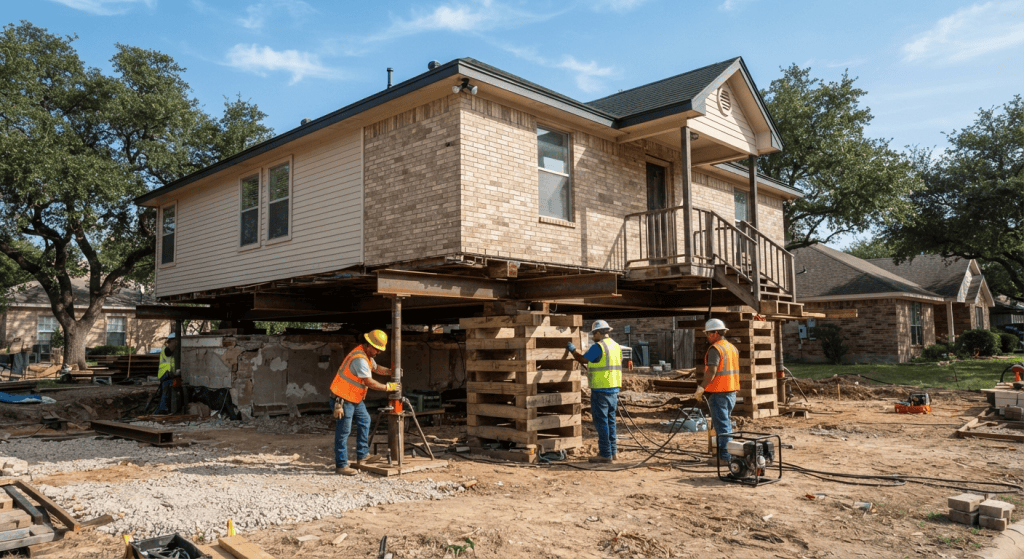
Pier and beam homes usually sit at the lower end. There’s already a crawl space under the floor, so crews can slide steel beams in without much fuss.
Slab homes cost more, often a lot more. The concrete slab has to come up with the house, and that’s a heavier, slower, more careful job. Think of these numbers as a starting point, not a quote.
House Lifting Price Per Square Foot
A lot of homeowners ask for a house lifting price per square foot. It’s a fair question, and some companies quote that way. For pier and beam lifts, it’s a handy way to compare.
The trouble is, square footage only tells part of the story. A 1,500 square foot brick home weighs a lot more than a 1,500 square foot home with siding. A lift of 3 feet is different from a lift of 10 feet.
So use the per-foot number to sanity check a bid. Don’t use it to build your budget.
What Pushes Your Home Elevation Cost Up or Down
Every home elevation cost comes down to a handful of things. Here are the big ones.
Foundation Type
Pier and beam is easier. Slab is harder. Block and base sits somewhere in the middle. This one factor can swing your price by tens of thousands of dollars.
How High You Need to Go
Your target height usually depends on your flood zone and the base flood elevation for your lot. Higher lifts need taller cribbing, bigger new piers and longer stairs. Every extra foot adds cost.
Size and Weight of the House
Brick veneer is heavy. Two-story homes are heavy. Attached garages and big porches add weight and complexity. More weight means more lifting points and more steel.
Site Access
Tight lots with fences, big trees or a neighbor’s house a few feet away slow everything down. Crews need room to set beams and move equipment.
The New Foundation
Once the house is up, it needs something to sit on. New piers, columns or a raised foundation wall all carry their own price tag. This part often surprises people the most.
Costs Beyond the Lift Itself
The lift is the headline. These are the extras that fill in the rest of the page:
- Engineering and drawings
- Permits and floodplain review
- A survey and elevation certificate before and after
- Disconnecting and reconnecting water, sewer, gas and electrical
- New stairs, decks or a ramp to reach the front door
- Raising the AC unit and water heater above flood level
A good contractor lists all of this up front. If a bid looks oddly low, check what’s missing.
Flood Zone Elevation Cost vs the Cost of Flooding Again
Yes, flood zone elevation cost is a big number. Now compare it to the alternative.
One flood can mean gutting drywall, tearing out flooring, replacing cabinets and living somewhere else for months. Do that twice and you’ve likely spent more than a lift would have cost. That’s before counting the stress.
Flood insurance matters here too. Homes raised well above base flood elevation often qualify for much lower premiums. You can look into how rates work on FloodSmart, the official site of the National Flood Insurance Program.
Why a FEMA Compliant Elevation Matters
A FEMA compliant elevation means the home is raised to meet floodplain rules for your area, with the right foundation, openings and utility placement. It matters for a few reasons.
First, it’s often required to get a permit at all. Second, it affects your flood insurance rate. Third, it can decide whether grant money is on the table.
We build every lift to meet those standards. If you’re still sorting out which zone you’re in, our guide on understanding Texas flood zones walks you through it.
Ways to Lower What You Pay
You can’t make a big job small. But you can make it more manageable.
Look into grants first. If you carry flood insurance and your home was declared substantially damaged, Increased Cost of Compliance coverage may help. Some communities also apply for FEMA mitigation funds on behalf of homeowners.
Financing helps too. We offer plans through Synchrony for approved buyers, so you can spread payments over time instead of paying all at once. For a lot of families, that turns one scary number into a monthly payment they can live with.
And think about timing. If you already need foundation repair, doing it during the lift can save money compared to doing two separate jobs later.

Why the Lifting System Matters as Much as the Price
Two bids can look close on paper and be miles apart on the job site. The lifting system, the crew’s experience and how they support the house during the lift all affect the result.
We wrote more about this in our post on home elevation questions and why the lifting system matters. Worth a read before you sign anything.
Questions We Hear About House Raising Cost in Texas
Can I stay in the house during the lift?
Usually not. For safety, families move out while the home is up on cribbing. Most plan for a few weeks, and the timeline depends on the size of the job and how fast permits clear.
Does raising a house increase its value?
In flood-prone neighborhoods, it often does. Buyers like lower flood insurance and a home that stayed dry during the last storm. That doesn’t erase the house raising cost in Texas, but it can win a good chunk of it back at resale.
Is it cheaper to raise now or after the next flood?
Almost always now. After a flood you’re paying for cleanup and repairs on top of the lift. Plus, crews and permits get backed up fast once a storm hits the Gulf Coast.
How long does the whole project take?
Small pier and beam lifts can move quickly once permits are in hand. Larger slab homes take longer because of engineering, the new foundation and reconnecting utilities. We give you a realistic schedule before any work starts.
Get a Real Number for Your Home
Ballparks are useful, but your house is one of a kind. The only way to know your true house raising cost in Texas is an on-site look at the structure, the lot and your flood zone.
We offer free inspections and clear written quotes, no pressure attached. Learn more about our house raising service or call (866) 617-0406 to set up a visit. Hurricane season comes back every year. Your home doesn’t have to flood with it.