House hunting in Houston? Or just trying to figure out what you’re living on? Sooner or later, the foundation type comes up.
Most homes around here sit on one of two systems. A concrete slab poured right on the ground, or a pier and beam setup that lifts the floor off the soil.
Both can be great. Both can have problems. The pier and beam vs slab foundation question really comes down to how each one handles Texas soil, water and time, and what it takes to fix them when they move.
What Is a Slab Foundation?
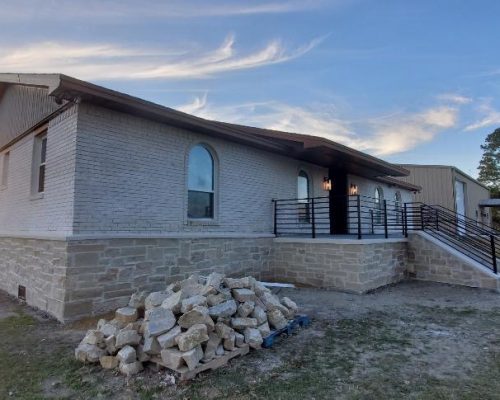
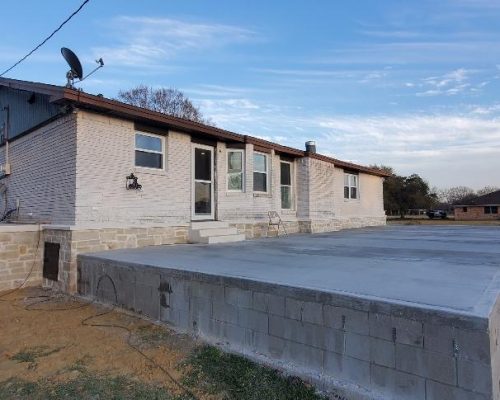
A slab foundation is a thick layer of reinforced concrete poured directly on prepared ground. It’s often called slab on grade, because it sits right at ground level.
Most Houston homes built from the 1960s on use slabs. Plumbing lines run under the concrete, and the floor of the house is basically the top of the slab.
Slabs are fast to build and generally cost less up front. That’s a big reason builders love them.
What Is a Pier and Beam Foundation?
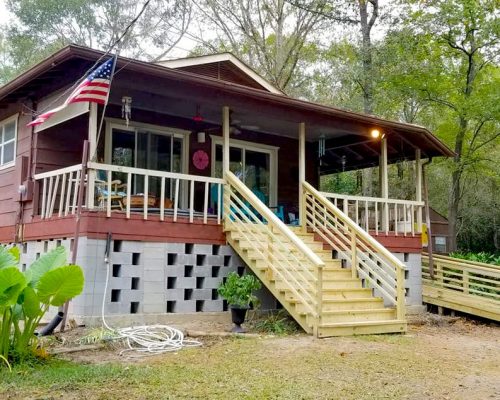
A pier and beam house sits on a grid of piers, with wood beams spanning between them. Floor joists rest on the beams, and the floor sits on top. Underneath is a crawl space foundation, usually 18 inches to a few feet high.
Older homes in neighborhoods like the Heights and Montrose often use this system. Some newer homes in flood-prone areas use it too, since it lifts the floor higher off the ground.
Pier and Beam vs Slab Foundation: Side by Side
Here’s a quick look at how they compare on the things homeowners care about most:
- Upfront building cost: slab is usually cheaper, pier and beam usually costs more
- Plumbing access: slab lines are buried under concrete, pier and beam lines are easy to reach
- Flood protection: slab sits low, pier and beam lifts the floor higher
- Feel underfoot: slab is solid and quiet, pier and beam has more give and can squeak
- Pest and moisture risk: slab has fewer crawl space issues, pier and beam needs good ventilation
- Repair access: slab repairs work from outside or under the slab, pier and beam work happens in the crawl space
Neither one wins every category. It depends on what matters most to you and where the house sits.
How Each Foundation Handles Houston Soil
Houston clay swells when it’s wet and shrinks when it’s dry. Both foundations feel that movement, just in different ways.
A slab moves as one big piece, but not evenly. One corner might drop while the middle heaves up. You’ll see it as cracks in brick, sticking doors and sloped floors.
Pier and beam homes move at each support point. One pier sinks, and the floor above it dips. The good news is that each pier can usually be adjusted on its own.
Foundation Repair Methods for Slab Homes
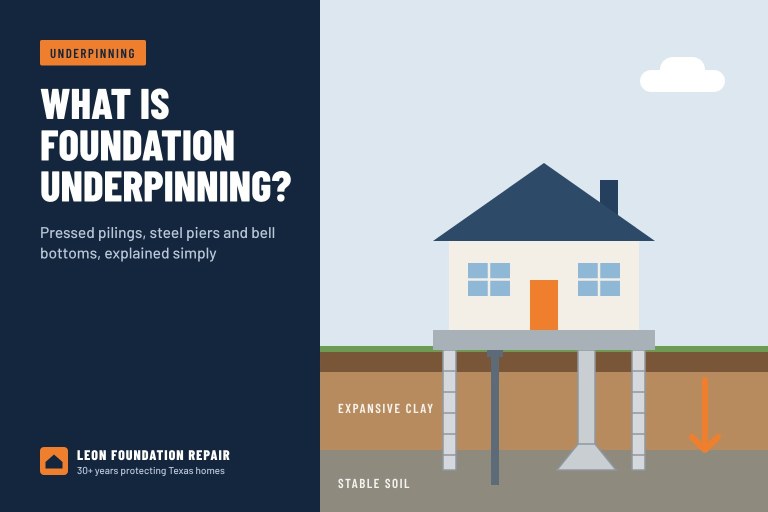
When a slab settles, the most common fix is underpinning. Piers are pressed or driven under the slab until they reach firm soil, then the house is lifted back toward level and set on them.
Interior piers sometimes need tunneling under the house to avoid breaking floors. Plumbing tests are often done before and after the lift, since buried pipes can be stressed when a slab moves.
Slab work is a bigger job overall, but once it’s done right, the results last. You can read more on our foundation repair page.
Foundation Repair Methods for Pier and Beam Homes
These homes have a big advantage. You can crawl under them.
The most common foundation repair methods here include reshimming, replacing sunken or cracked piers, adding new support points and fixing rotted beams or sill plates. Much of the work comes down to careful house leveling from inside the crawl space.
Pier and beam homes use wood shims rather than steel for good reasons. We broke that down in our post on steel shims vs wood shims.
Which Costs More to Repair?
In general, pier and beam repairs cost less, especially for simple releveling. The access is easier and the work is often lighter.
Slab repairs usually cost more because piers have to go deep and the whole house has to be lifted as one unit. That said, a pier and beam home with lots of rotted wood can surprise you.
Either way, catching problems early keeps the bill smaller. That part doesn’t change with the foundation type.
Which Is Better in a Flood Zone?
Pier and beam has a natural edge here. The floor sits higher off the ground, and it’s also easier to raise further if you ever decide to elevate the home.
Slab homes can be raised too, but it’s a bigger, more involved project. If you live in a flood-prone area and you’re weighing the pier and beam vs slab foundation choice for a new build or a purchase, flood height deserves real weight in the decision.
What to Check When Buying a Home
Thinking about buying? Look past the paint. A few minutes of checking can save you thousands.
For slab homes, look for cracks in exterior brick, gaps around windows and doors that stick. For pier and beam homes, peek into the crawl space if you can. Look for standing water, damaged wood and leaning piers.
We put together more tips in our post on what to watch for when buying a new home. And if you want to know what building codes say about foundation construction, the International Code Council publishes the codes most Texas cities adopt.
Maintenance Tips for Each Type
A little upkeep goes a long way, no matter which foundation you have.
For slab homes, keep soil moisture steady around the perimeter during long dry stretches. Watch for plumbing leaks, since a hidden leak under the slab can soften the soil fast. Keep gutters draining well away from the house.
For pier and beam homes, keep the crawl space dry and well ventilated. Check for standing water after heavy rain, and look for termite tubes or soft wood once a year. Small shim adjustments now beat big beam repairs later.
Pier and Beam vs Slab Foundation: Quick Answers
Which lasts longer?
Both can last a lifetime with care. Neglect shortens either one.
Which is easier to sell?
In most Houston neighborhoods, buyers are comfortable with both. What hurts a sale is an unrepaired problem, not the foundation type.
So, Which One Is Better?
Honestly, the best foundation is the one that was built well and maintained well. A solid slab beats a neglected pier and beam home. A well-kept pier and beam house beats a slab sitting in a soggy yard.
What matters most is understanding what you have and keeping an eye on it. Steady moisture, good drainage and quick action when something looks off go a long way with both types.
Not Sure What’s Going On Under Your Home?
Slab or crawl space, we’ve been fixing both across Houston for more than 30 years. Learn more about our crawl space foundation work, or call (866) 617-0406 for a free inspection. We’ll show you what we find and explain your options in plain English.