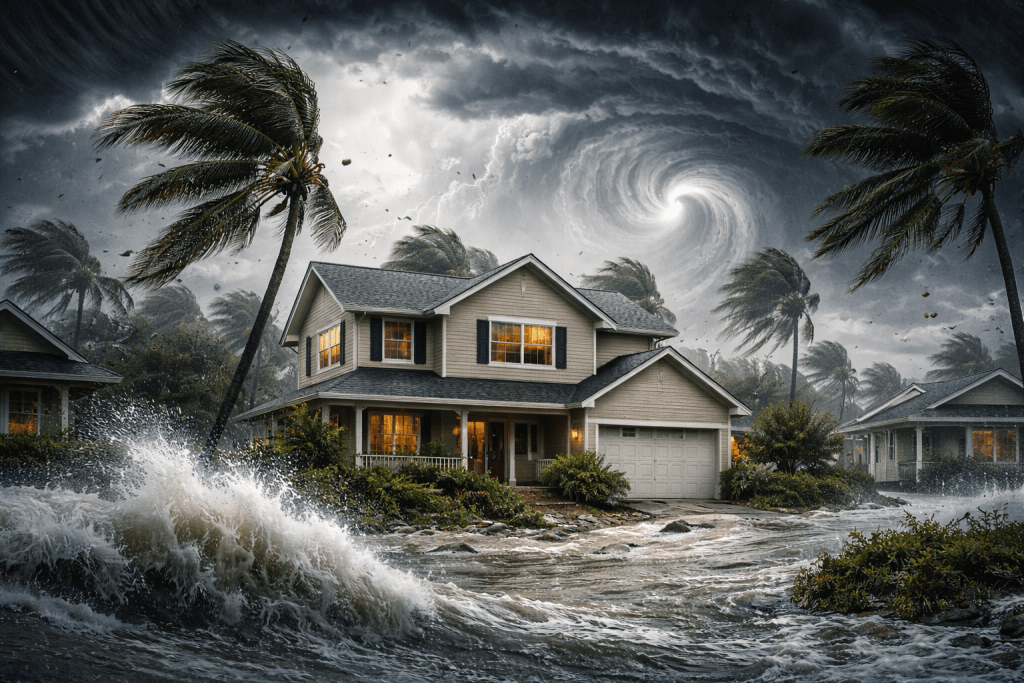
Homeowners in Texas, particularly those along the Gulf Coast, have to deal with hurricane season. The Atlantic hurricane season technically lasts from June 1 to November 30 each year. Most storms happen between August and October, however. Tropical systems may form swiftly during these months, bringing torrential rain, strong winds, storm surge, and floods across a large area.
Not every hurricane hits Texas directly, but history demonstrates how big of an effect one can have when it does.
Hurricane Harvey, which hit the U.S. in 2017, was one of the worst hurricanes in history. It dropped more than 60 inches of rain in some sections of Southeast Texas. It did almost $125 billion in damage and inundated hundreds of thousands of houses. Hurricane Ike hit land in Galveston in 2008 as a Category 2 hurricane, causing a lot of structural damage and a strong storm surge. Even storms that lose strength before they get to Texas may still bring heavy rain, flash floods, and winds that are deadly.
Knowing the dangers and being ready ahead of time may make a big difference.
One of the first things you should do to be ready for a storm is find out whether your property is in a flood zone. Many people who own homes think they are safe since they have never had floods before. Flood maps can alter over time, however, and the amount of rain has been becoming heavier in recent years.
Flood Insurance Rate Maps (FIRMs) are available to the public via the Federal Emergency Management Agency (FEMA). Homeowners may go to the FEMA Flood Map Service Center website and type in their address to find out whether their home is in a flood zone. Zone A and Zone AE are high-risk flood locations, but Zone X is usually lower risk. It’s crucial to remember that “low risk” doesn’t equal “no risk,” particularly during big storms.
Your county appraisal district or local floodplain management agency is another useful resource. Many counties in Texas have online GIS mapping tools that let you look up your location and see floodplain overlays. These tools can tell you whether your house is in the 100-year floodplain, which means there is a 1% risk of flooding every year.
Elevation certificates may help homeowners figure just how high floods might go. An elevation certificate shows how your home’s lowest completed level relates to the base flood elevation (BFE) in your location. If your floor is higher than the BFE, you could be less likely to have structural flooding. If you don’t already have one, licensed surveyors may provide you an elevation certificate.
There are various applications and digital technologies that may help you understand the danger of flooding. You may see interactive floodplain maps on the websites of FEMA’s Flood Map Service Center, the National Flood Hazard Layer viewer, and several county flood control districts. The Flood Control District in Harris County, for example, has an online Flood Education Mapping Tool that lets people look at possible flood threats.
It’s important to do more than just know where the flood zones are.
As part of making a hurricane ready plan, you should put together an emergency supply pack containing bottled water, nonperishable food, flashlights, batteries, portable phone chargers, first aid items, and vital papers in waterproof containers. During the buildup of a storm, homeowners should also keep an eye on reliable weather sources like the National Hurricane Center and their local emergency management agencies.
You may lower the risk of water accumulation and wind damage by cleaning out your gutters, anchoring your outdoor furniture, cutting tree limbs, and monitoring the drainage paths around your property. In certain cases, sandbags may be used to redirect shallow water, but they won’t help with catastrophic floods.
Before hurricane season gets worse, it’s also a good idea to check your insurance policy. Most standard homeowner’s insurance plans don’t cover damage from floods. Flood insurance plans from the National Flood Insurance Program (NFIP) sometimes don’t start working for 30 days, so it’s important to prepare ahead.
Don’t forget to prepare for evacuation. Know where your local evacuation zone is, prepare for your pets and family members, and know more than one way to get out of your neighborhood. Before hurricane season, local emergency management departments put out maps and advice on how to evacuate.
Hurricane season doesn’t imply tragedy is certain, but it does mean you should take preparedness seriously. Knowing your flood danger, your height, and how to use official mapping tools may make your house and emergency supplies more safer and more at ease.
There is no question of “if” a storm will hit Texas, just “when.” One of the most critical things every homeowner can do is to be ready before a storm is announced.