Raising a house isn’t cheap. For a lot of families in flood-prone parts of Texas, the price tag is the only thing standing between them and a dry home.
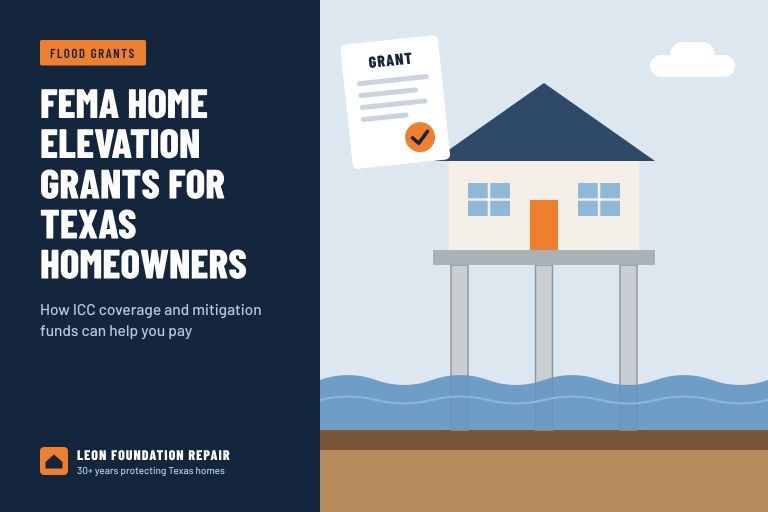
That’s where grant money comes in. A FEMA home elevation grant can cover a big share of the work, sometimes most of it. The catch is that the process is slow, a bit confusing and full of rules.
We’ve helped plenty of Houston-area homeowners through elevation projects. Here’s a plain-English look at how the money works and how to avoid the mistakes that sink applications.
What a FEMA Home Elevation Grant Actually Is
There isn’t one single grant with that name. “FEMA home elevation grant” is really a catch-all for a few different programs that can pay to raise flood-prone homes.
The big ones for Texas homeowners are Increased Cost of Compliance coverage, the Flood Mitigation Assistance program and the Hazard Mitigation Grant Program. Each one works a little differently.
The common thread? They all exist to reduce future flood losses. Raising a home above expected flood levels is one of the most proven ways to do that.
Increased Cost of Compliance Coverage
This one is the fastest path for many people, and a lot of homeowners don’t even know they have it.
Increased Cost of Compliance coverage is part of most National Flood Insurance Program policies. If your home floods and is declared substantially damaged, ICC can pay up to $30,000 toward bringing the house into compliance with local floodplain rules. Elevation is one of the approved options.
$30,000 won’t cover a full lift in most cases. But stacked with savings, financing or other grants, it can make the project possible. You can read the details on FEMA’s Increased Cost of Compliance page.
The Substantial Damage Determination
ICC usually hinges on something called a substantial damage determination. Your local floodplain administrator makes this call after a flood.
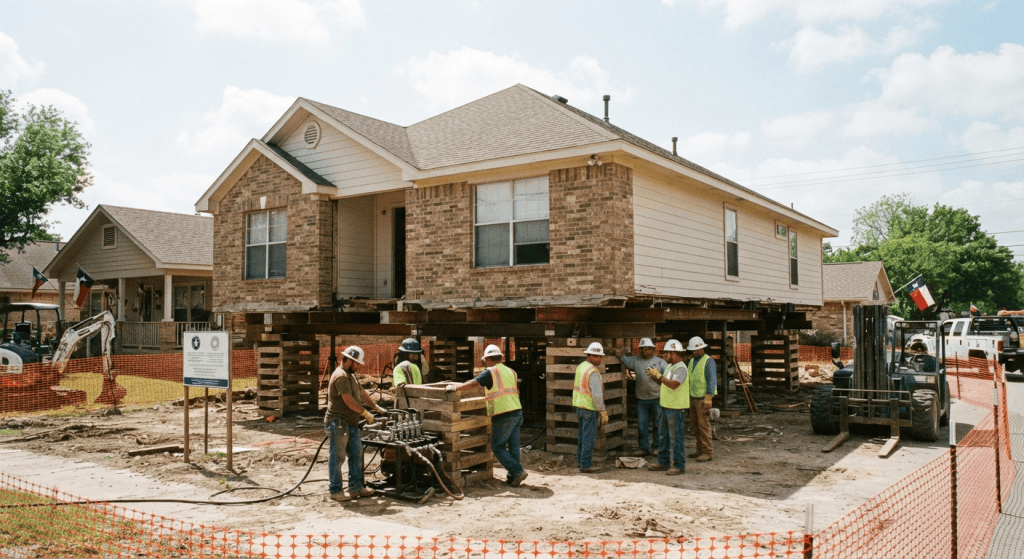
In general terms, if repairing the home would cost 50% or more of its market value, it’s considered substantially damaged. At that point, local rules usually require the home to be brought into compliance before it can be rebuilt. Often, that means raising it.
It sounds like bad news. In a way, it can be a door opening. That determination is often what unlocks ICC money.
The Flood Mitigation Assistance Program
The Flood Mitigation Assistance program is a yearly FEMA grant meant to reduce flood risk for insured properties. It favors homes that have flooded more than once.
Here’s the part people miss. Homeowners don’t apply directly. Your city or county applies on your behalf, usually through the state. In Texas, the Texas Water Development Board manages this program for communities.
FEMA typically covers a large share of the cost, and homes with repeated flood claims may qualify for an even bigger share. The rest is usually the homeowner’s responsibility.
Hazard Mitigation Grant Program
After a major disaster declaration, Texas often receives Hazard Mitigation Grant Program funds. Local governments use some of that money to elevate or buy out flood-prone homes.
These rounds tend to open after big storms. If your area was hit, keep an eye on announcements from your city, county or local flood control district.
Who Usually Qualifies
Every program has its own rules, but most give priority to homes that:
- Carry active flood insurance through the NFIP
- Sit in a mapped high-risk flood zone
- Have flooded more than once, with past insurance claims
- Can be elevated in a cost-effective way
If you’ve never carried flood insurance, your options shrink. That’s one more reason to keep a policy in place, even in years when it feels unnecessary.
The Paperwork You’ll Need
Grant applications run on documentation. Start gathering it early.
An Elevation Certificate
An elevation certificate shows how high your lowest floor sits compared to the base flood elevation. It’s prepared by a licensed surveyor or engineer, and almost every program asks for one.
Flood Claim History
Pull together records of past NFIP claims, including dates and payout amounts. Repeated claims help your case.
Contractor Estimates
Programs want realistic cost figures. A detailed written estimate from an experienced elevation contractor gives reviewers something solid to work with.

The Mistake That Costs People Their Grant
This is the big one, so we’ll say it plainly. Don’t start construction before your grant is approved.
Most mitigation programs won’t reimburse work that began before approval. Homeowners who rush ahead, even with good intentions, can lose eligibility completely. Wait for the written go-ahead.
We know waiting is hard, especially with hurricane season on the calendar. Use the time to line up your paperwork and pick your contractor so you’re ready to move fast.
How Long Does the Process Take?
Honestly? It can take a while. ICC claims after a flood can move within months. Mitigation grants through your community can take a year or more from application to construction.
That timeline is one reason some homeowners decide to raise their house on their own schedule, using financing or savings, instead of waiting on a grant round that may not come.
Make Sure the Work Is FEMA Compliant
Grant money comes with strings. The finished project has to meet floodplain rules, including height, foundation type and how utilities are placed.
Our house raising projects are built to be FEMA compliant from day one. If you want background on the basics first, our post on what home elevation is is a good place to start, and our guide to Texas flood zones covers how height requirements are set.
How Grants and Flood Insurance Savings Work Together
A FEMA home elevation grant pays for part of the work once. Lower flood insurance premiums keep paying you back every year after that.
Homes raised well above base flood elevation often see big drops in what they pay for flood coverage. Over ten or twenty years, those savings can add up to a serious chunk of the homeowner’s share.
Put those two together and the math on elevation starts to look a lot better than the sticker price suggests.
Quick Answers on Elevation Grants
Can I use a grant and financing together?
In many cases, yes. Grants rarely cover everything, so a lot of homeowners cover the gap with savings or a financing plan.
Does the grant pay the contractor directly?
It depends on the program. Some pay through your local government, some reimburse costs as the work is completed. Your floodplain office will explain how payments flow for your project.
Do I need flood insurance after the house is raised?
Grant-funded homes are often required to keep flood insurance in place. Even when it isn’t required, it’s a smart move here on the Gulf Coast.
Ready to Talk Through Your Options?
A FEMA home elevation grant can be a huge help, but it’s only one piece. You still need a solid plan, a realistic estimate and a crew that knows how to lift homes safely.
We’ve been doing this for over 30 years. Call (866) 617-0406 or request a free estimate, and we’ll look at your home, talk through funding options and give you numbers you can use in any application.